SprintOut
Optimizing Print Environments for Architecture Students
Overview
Architecture and design students rely heavily on printouts, not just for submissions, but for critiques, discussions, and pin-ups happening every other class. Yet the printing process is chaotic: long queues, uninformed decisions about wait times, and print shop owners struggling to manage peak demand with manual processes.
We designed Sprintout to bridge this gap, empowering students with real-time data to make informed decisions while giving print shops tools to optimize operations and maximize productivity.
Role
UX Generalist
Timeline
Jan 2023- May 2023
Team
2x Designers
Tools
Figma, Adobe Suite, Notion.
Impact
40%
Faster Print Approval Rate
60%
Reduction in Repetitive Tasks
PROBLEM
When 30 Students Fight Over 4 Printers
30 students crowding around 4 printers. Each A1 sheet takes 3-5 minutes to print. Submission is due in 20 minutes. Arguments erupt over who gets to print first. The librarian struggles to maintain order. As a result, 12 students got late remarks and lost attendance.
This wasn't a one-time incident, it was the norm.
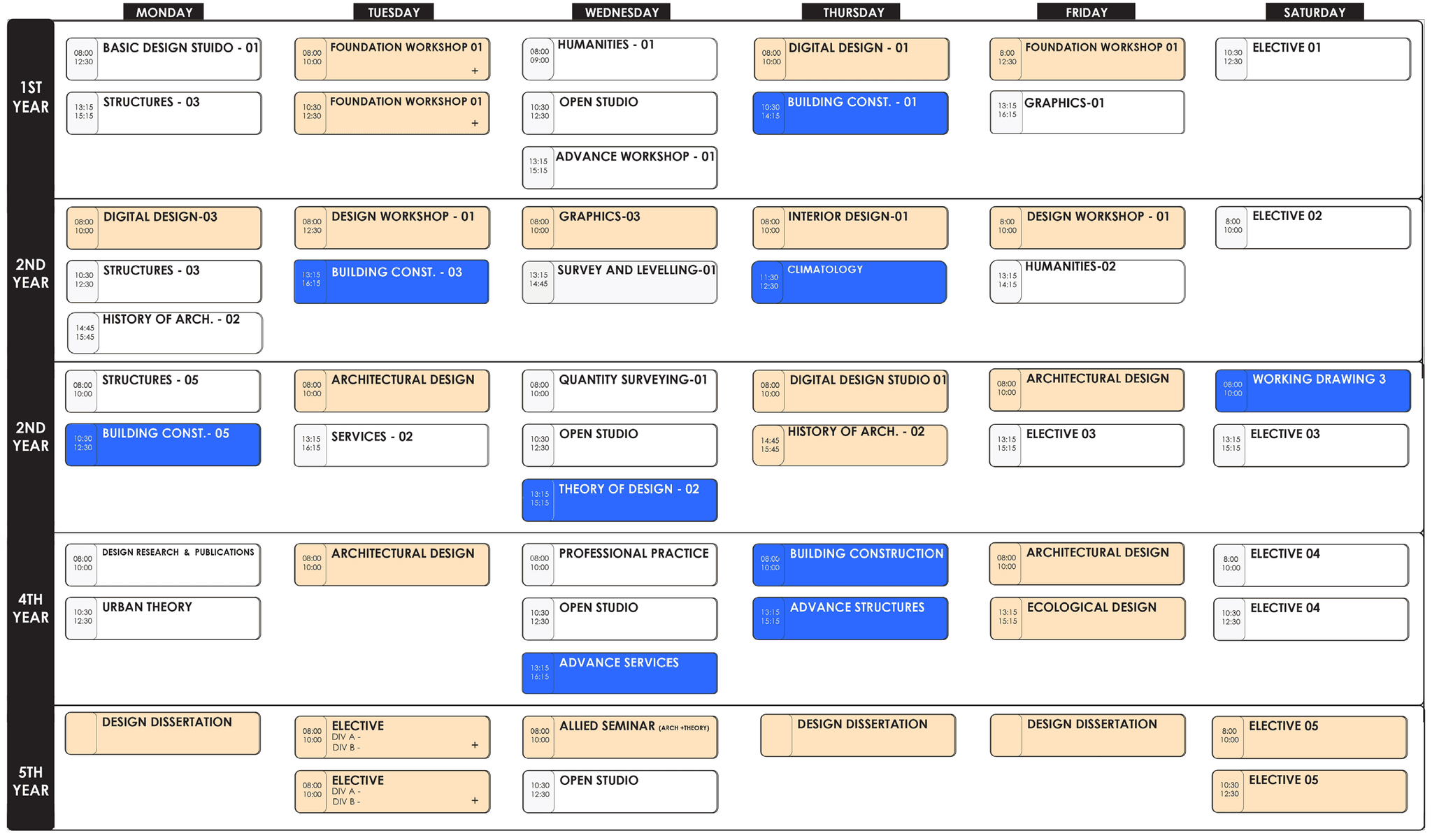
Printouts required for subjects every 1 out of 2 classes
Printouts required for subjects every 1 out of 3-4 classes
Timetable of an architecture school
USER RESEARCH
Understanding the Student Experience
We started our user research by interviewing and journey mapping with 6 architecture students (4 from schools with in-house printers and 2 relying on external shops), with the main objective to understand the following:
What does a typical routine for an architecture & design student look like?
What were the various steps involved in obtaining a printout?
What were the various challenges encountered when performing these tasks?
By analyzing each step alongside the user’s frustration and satisfaction levels, I was able to pinpoint the critical moments in the journey that needed the most attention and improvement.
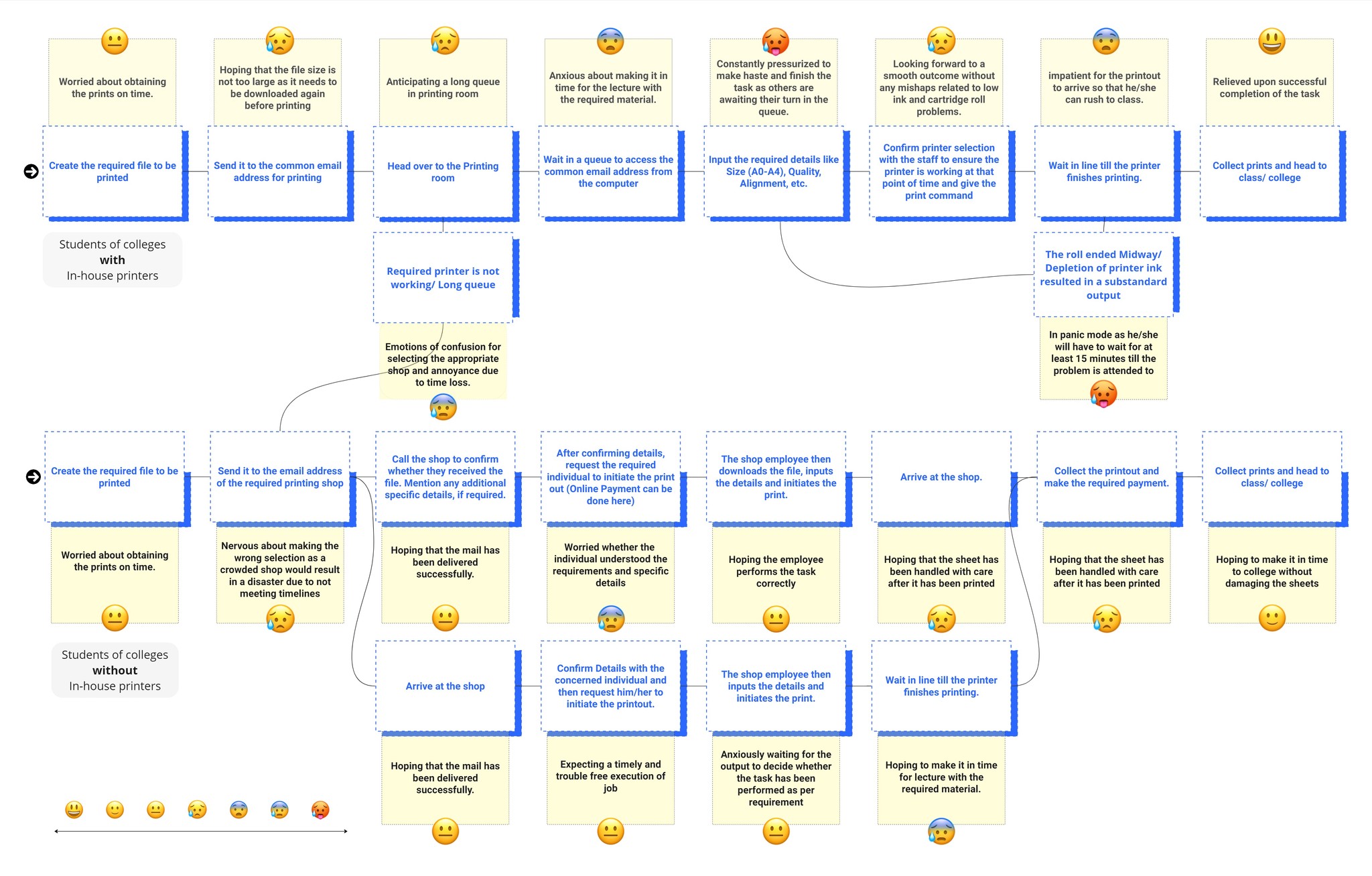
Students of Colleges with In- house printers (Top) | Students of Colleges without In-house printers (Bottom)
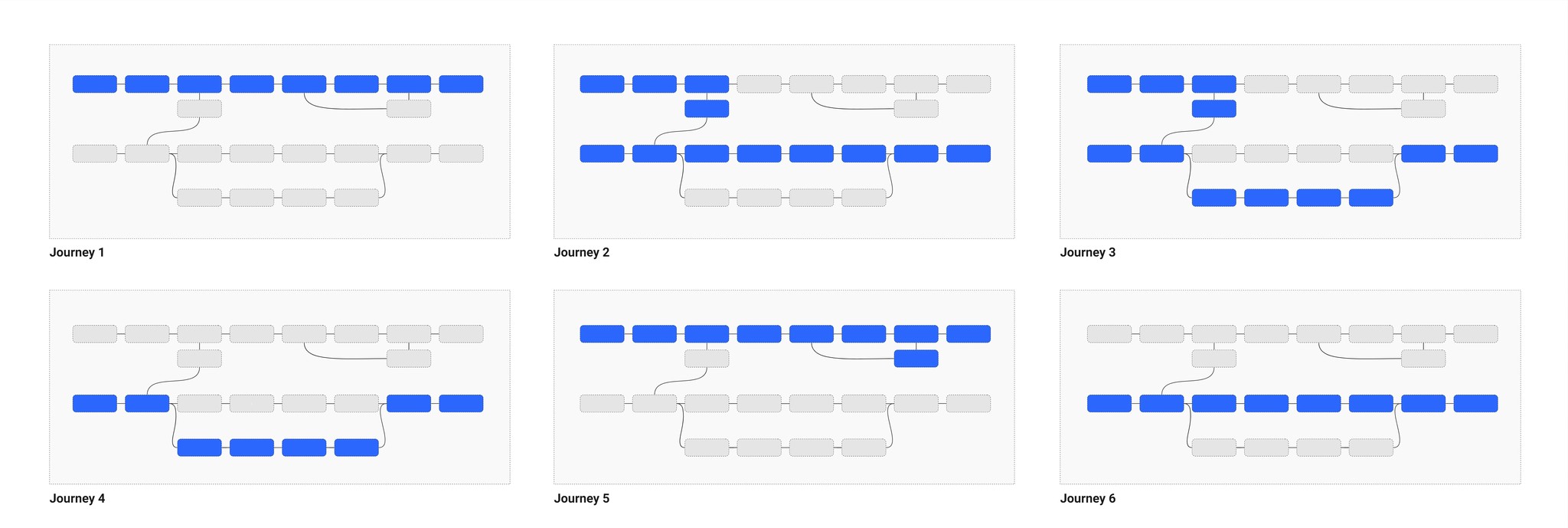
Individual Journey map of 6 participants consisting of 4 students from colleges with in-house printers and 2 students without in-house printers
PAIN POINTS
Repetitive Tasks
Students had to specify print details via email/calls, then watch as shop employees re-entered the same information into the system.
No Control Over Timing
Students without in-house printers weren't the ones giving the print command, they relied on shop employees, creating anxiety about whether prints would be ready on time.
Guesswork on Wait Times
Students had no way to predict queues or wait times, forcing them to guess which shop would be least crowded and hope for the best.
"I just want to know if my print be ready before class starts? Right now, it's a gamble."
— Architecture student, 3rd year
USER RESEARCH
Understanding the Other Side of the Counter
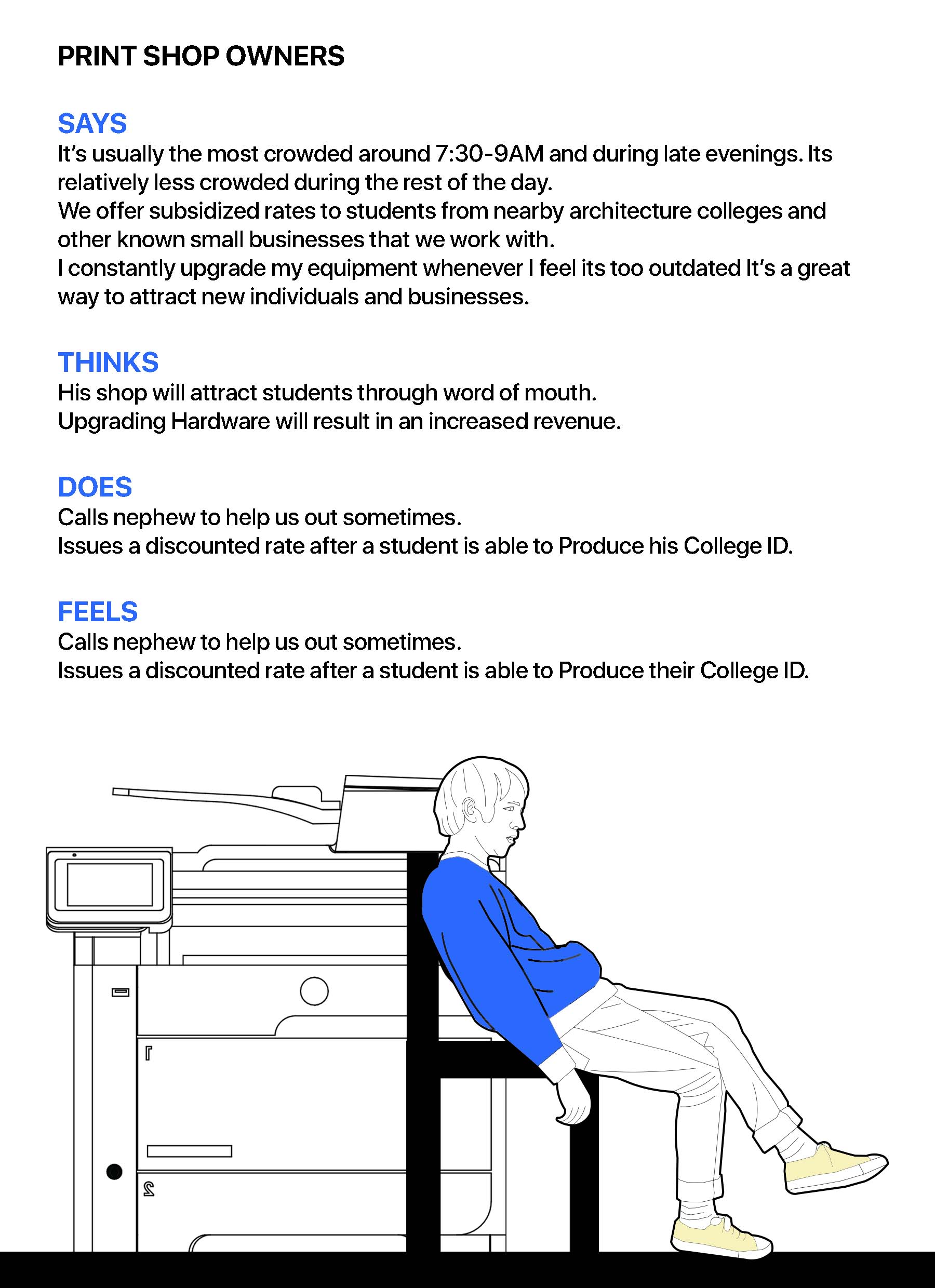
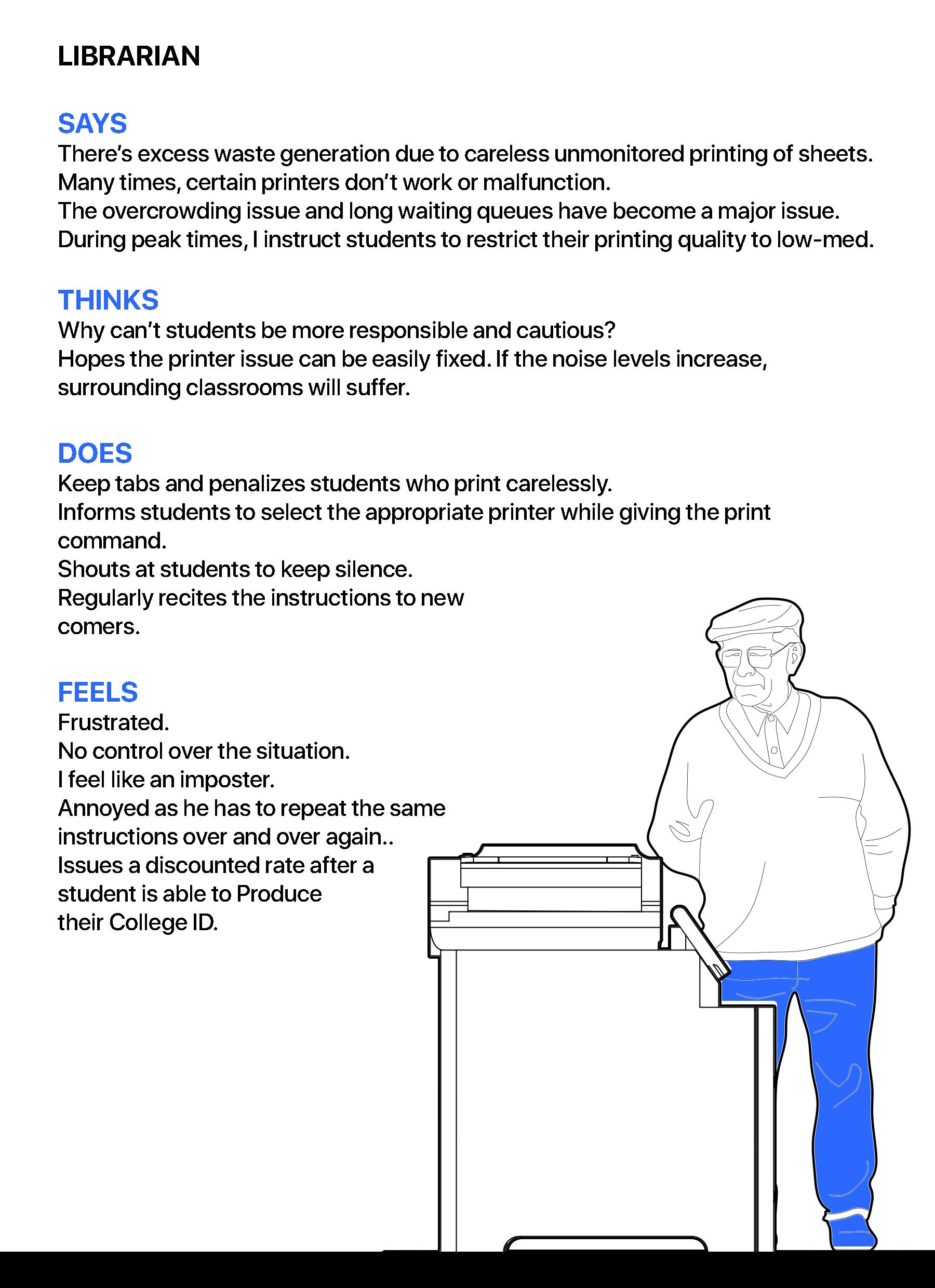
Students weren't the only ones struggling. To design a solution that would actually work, I needed to understand the print shop perspective, their constraints, their workflows, and what made running a printing service profitable (or not).
Before approaching shop owners, I studied industry reports from Heidelberg and Darrel Amy to understand:
What is the current state of the printing industry?
What challenges do owners face when scaling?
What factors make or break a printing service?
Where do opportunities exist?
KEY FINDING
In most print environments, productivity sits between 20-40%. That means 60-80% of potential isn't being utilized. Improving productivity by just 20% can increase profits by 50%.
The research also identified 6 strategies for long-term growth:

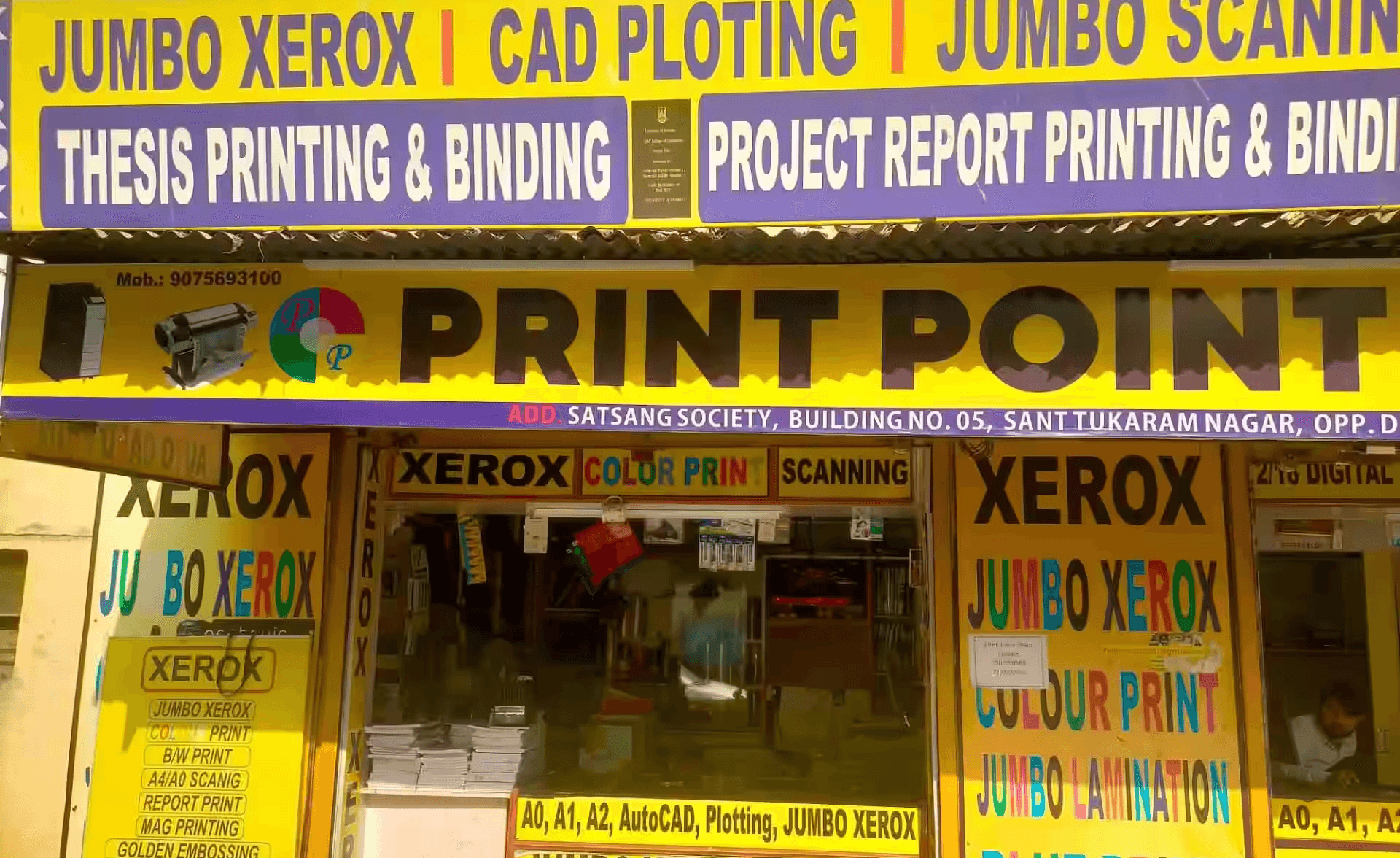
Next, I wanted to see how local print shop owners were (or weren't) implementing these strategies. I visited I visited 2 colleges with in house printers and 2 local shop owners.
KEY TAKEAWAYS
Manual Processes and Short-Term Solutions
The interviews revealed two critical gaps:
Scaling Meant More Bodies, Not Better Systems
"My son skips school to help during busy weeks"
High demand is predictable (submission weeks)
Labor costs spike
Doesn't address root inefficiency
Investment Focused on Speed, Not Intelligence
3 out of 4 owners said "Buy faster printers"
No one tracked which hours were busiest
No data on popular print settings
Manual book-keeping only
No analysis to guide investments
CONNECTING THE DOTS
Two Sides of the Same Problem
The root issue was visibility: students had no way to predict wait times, leading to guesswork and late submissions. Print shops operated manually, no data, no optimization, resulting in inefficiencies that spiraled during high-demand periods.
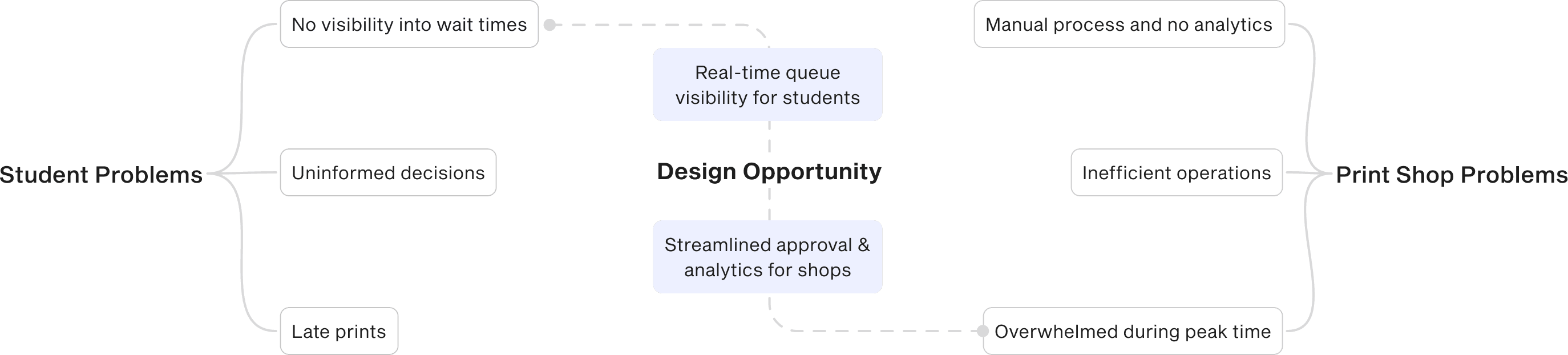
How might we optimize processes in printing environments to empower students to obtain quality printouts in a timely manner.
IDEATION
At this point, I believed I had a good understanding of the functioning and role of each stakeholder. I did a storyboarding session with these individuals to validate what I had in mind
User Story 1
User Story 2
User Story 3
User Story 4
IDEATION 1.1
Shorter wait times at printing locations, more informed decision-making, and greater control.
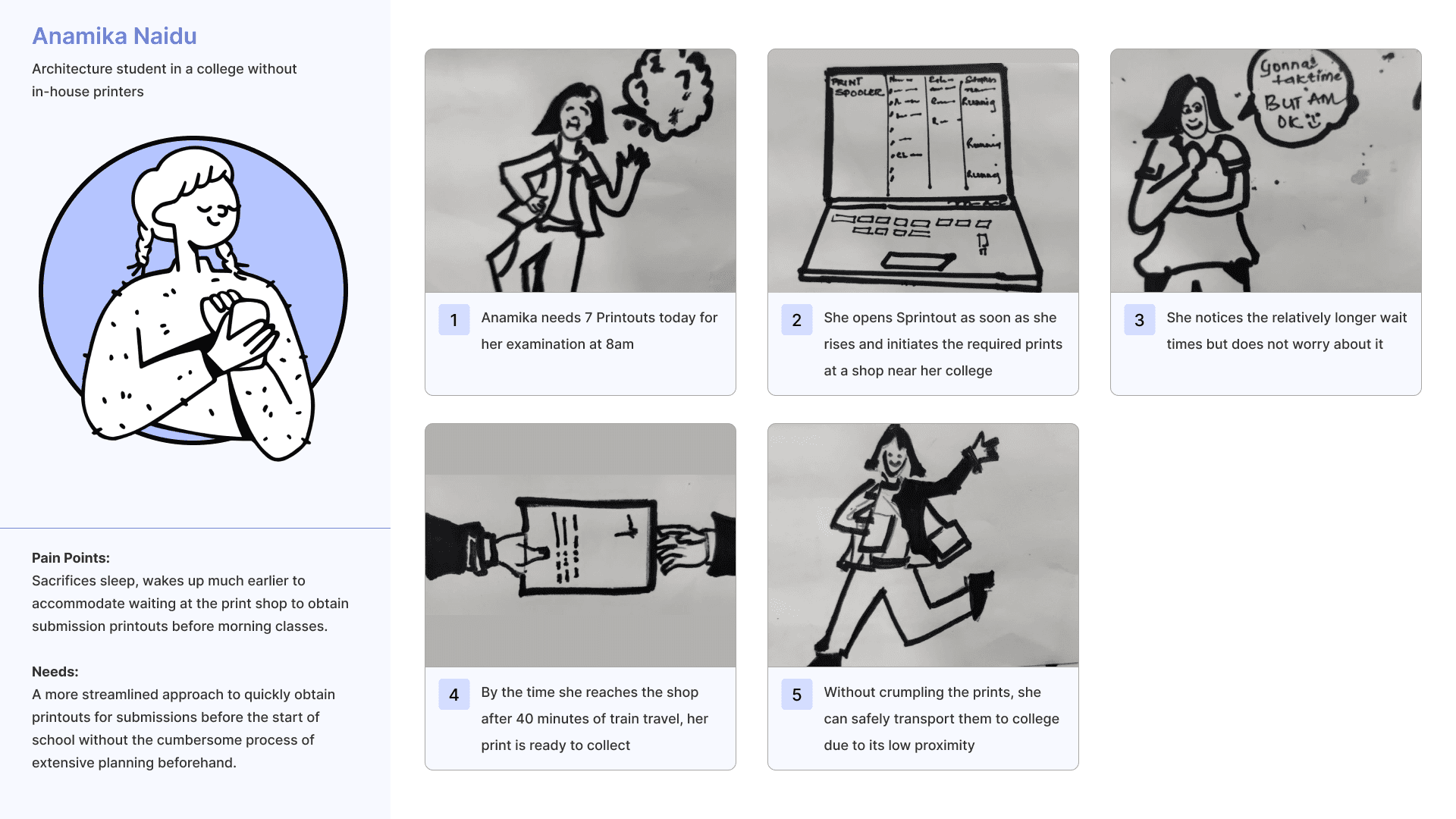
Participants responded enthusiastically to the concept. The standout feature? Students controlling their own print submissions, no more handing off files and hoping employees entered settings correctly. Remote printing from anywhere was a close second.
FINAL SOLUTION SNAPSHOT
1
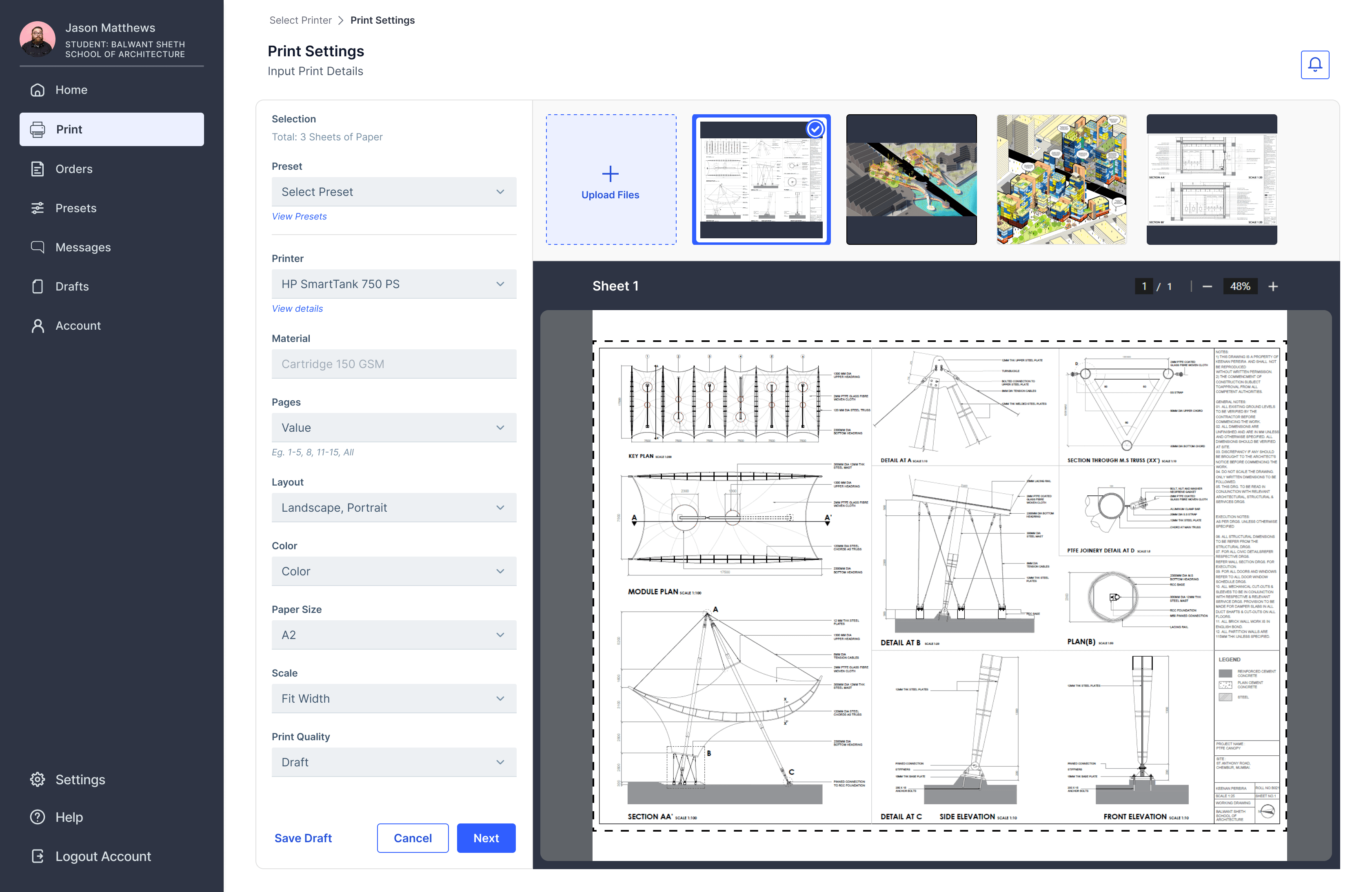
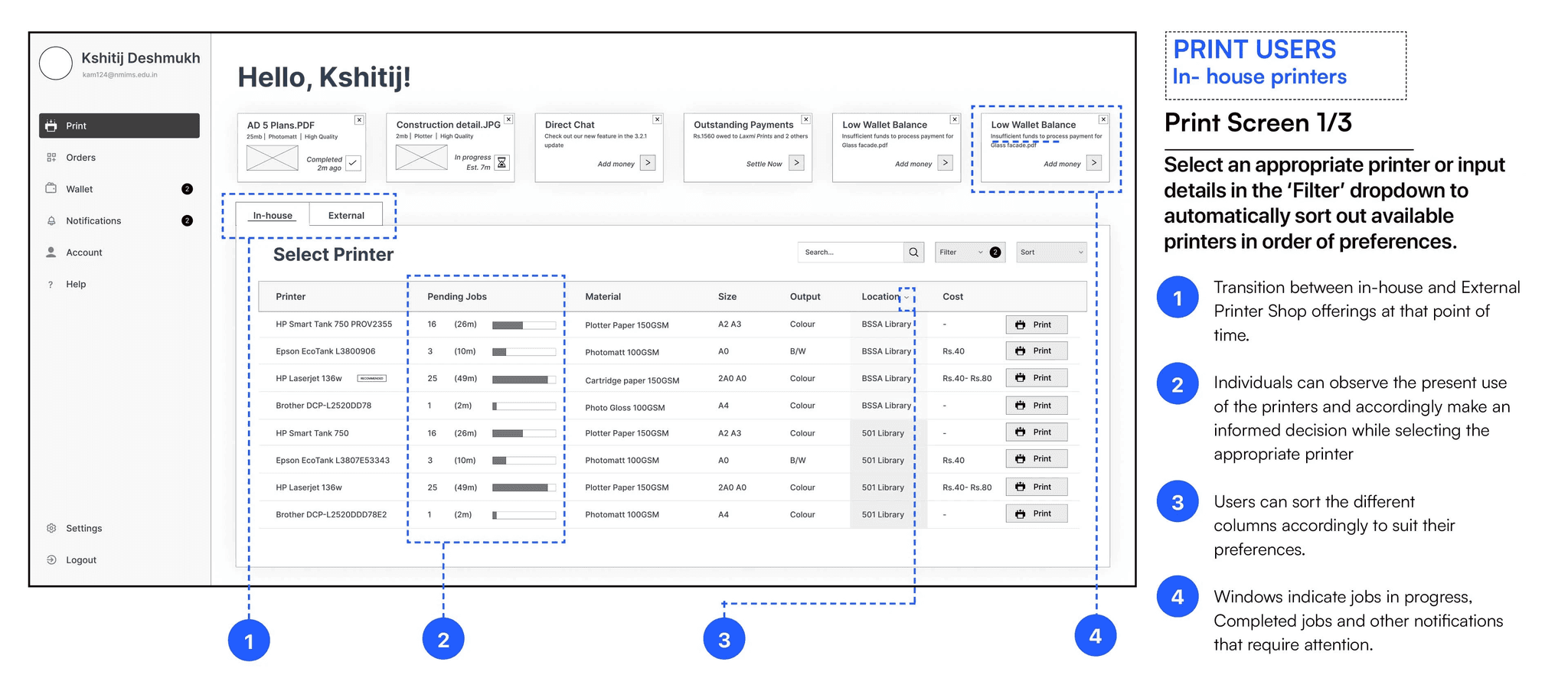
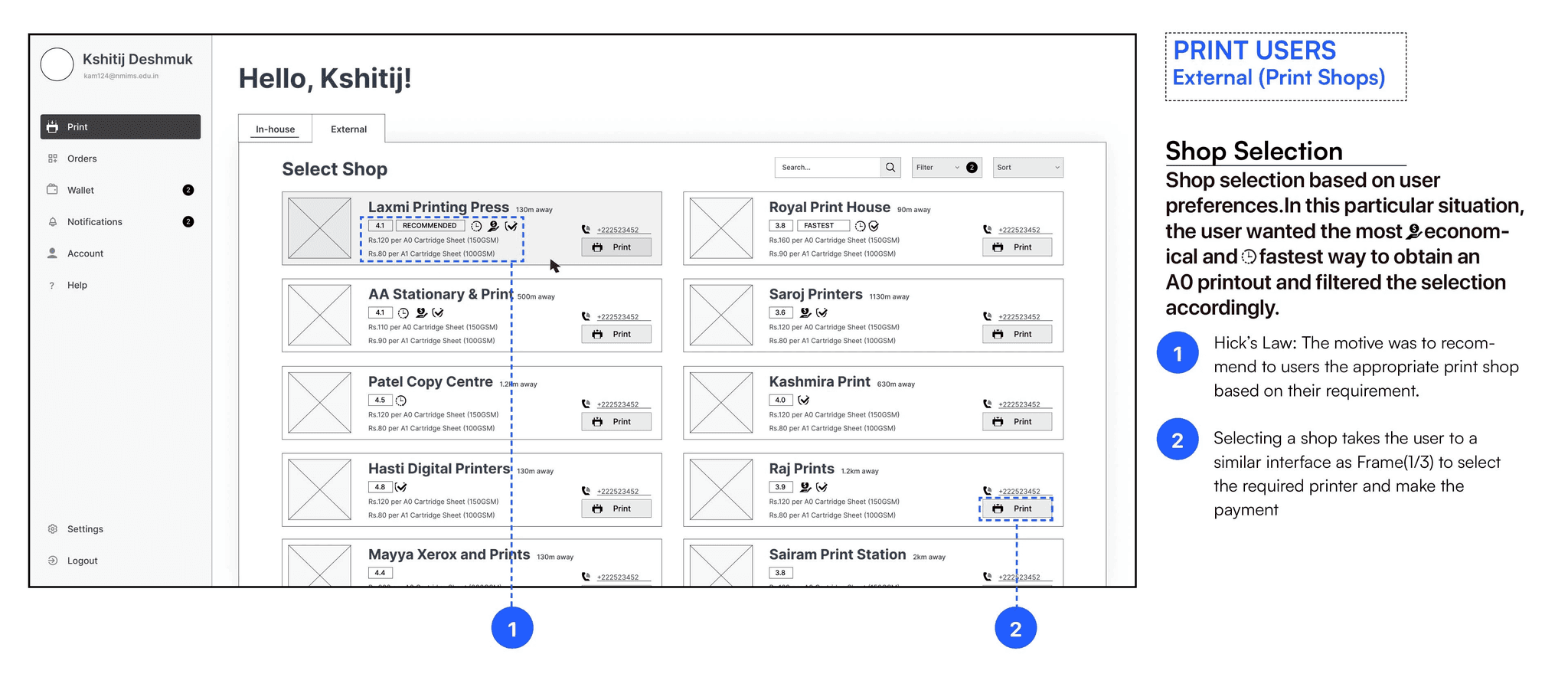
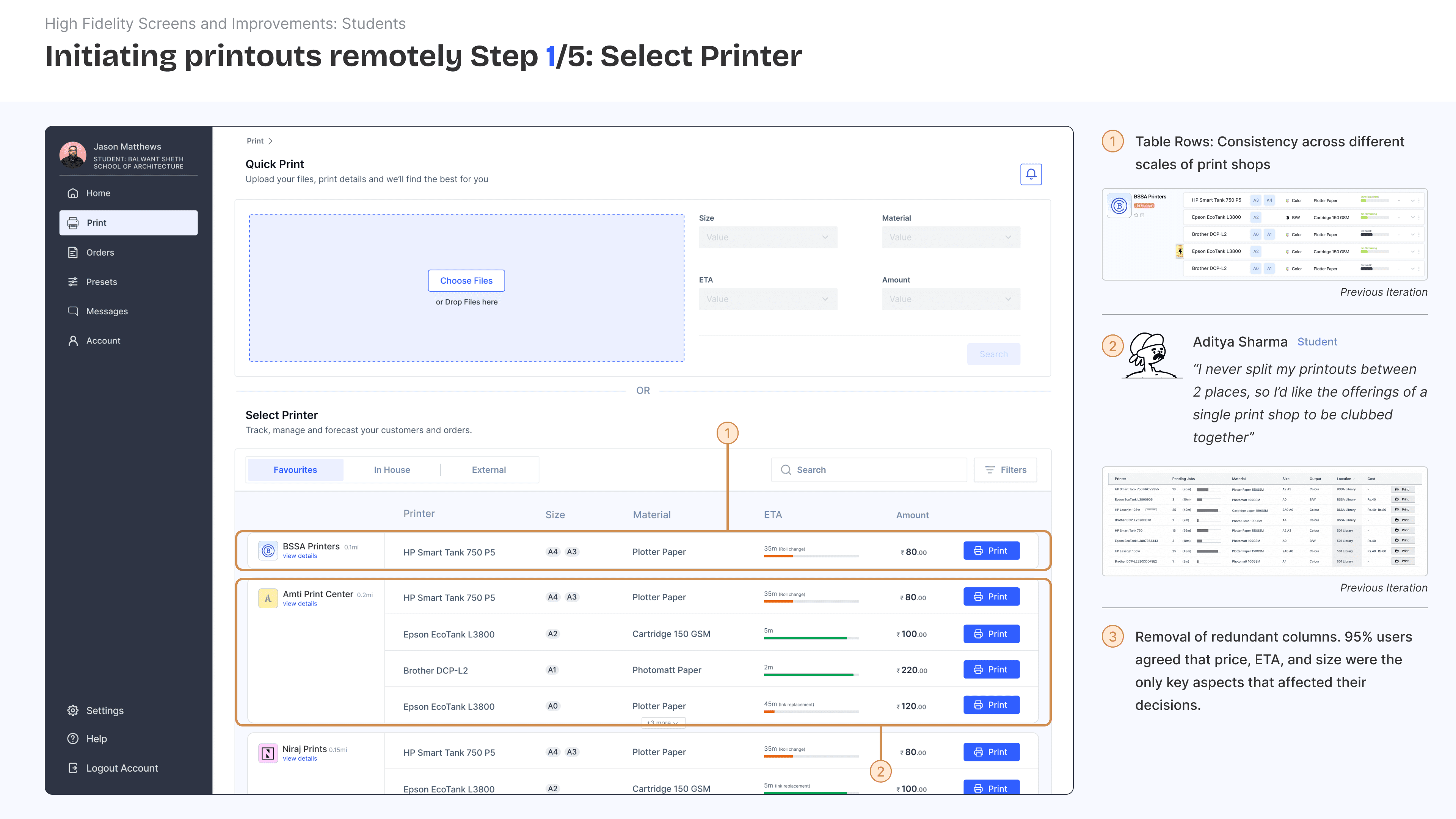
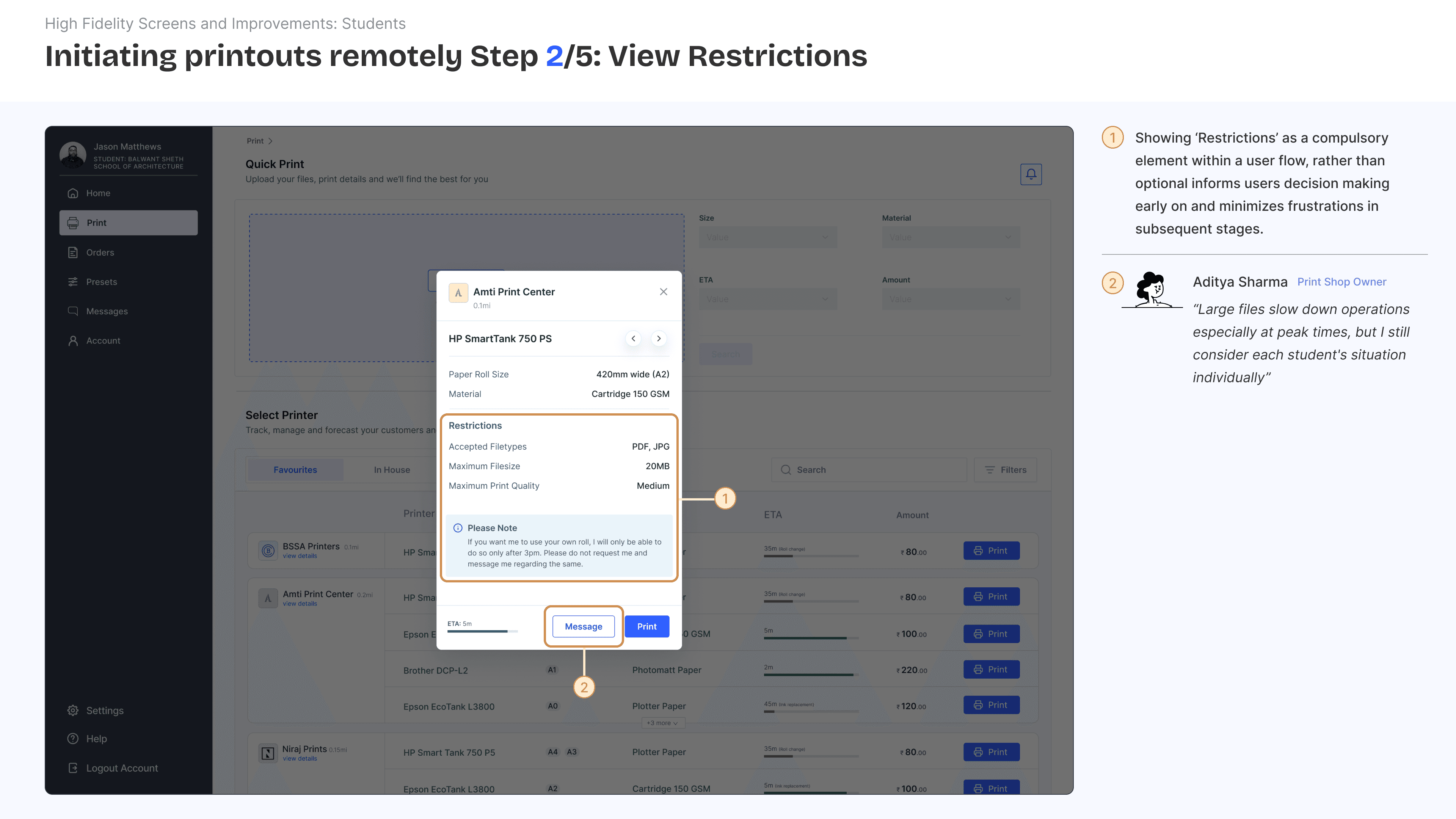
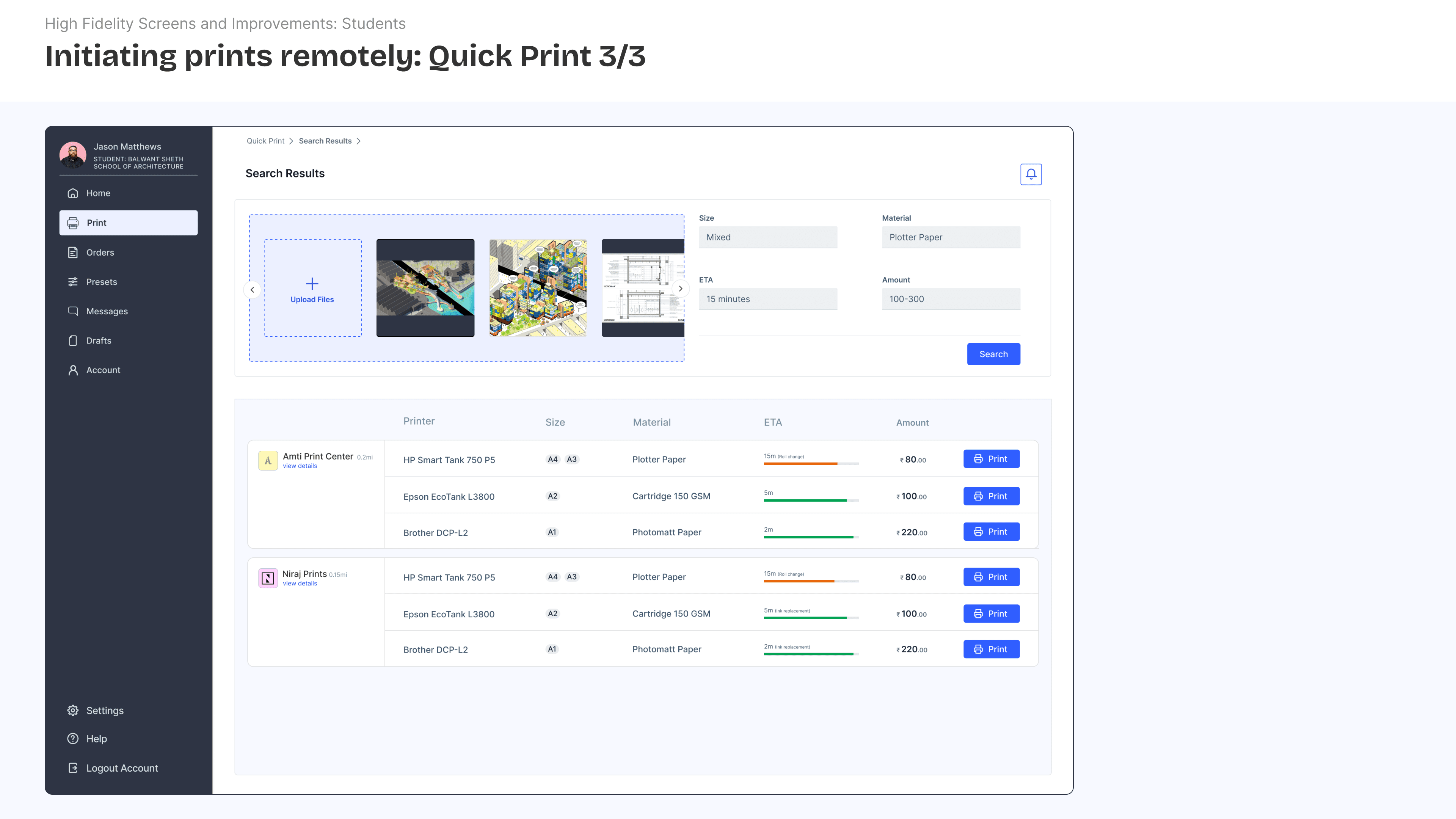
Sprintout equips users with key data to make informed decisions that balance time, cost and quality considerations for their printing needs.
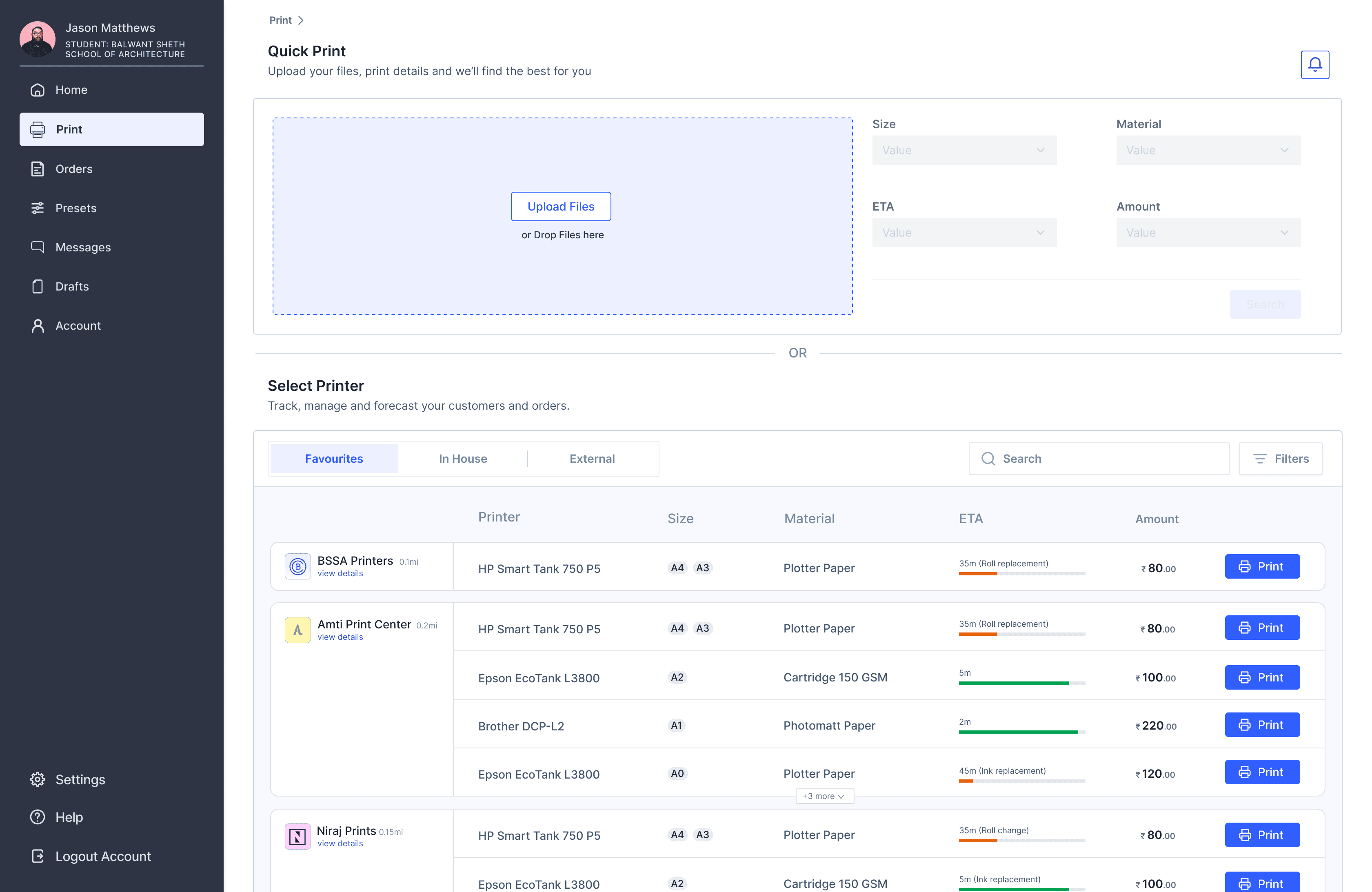
2
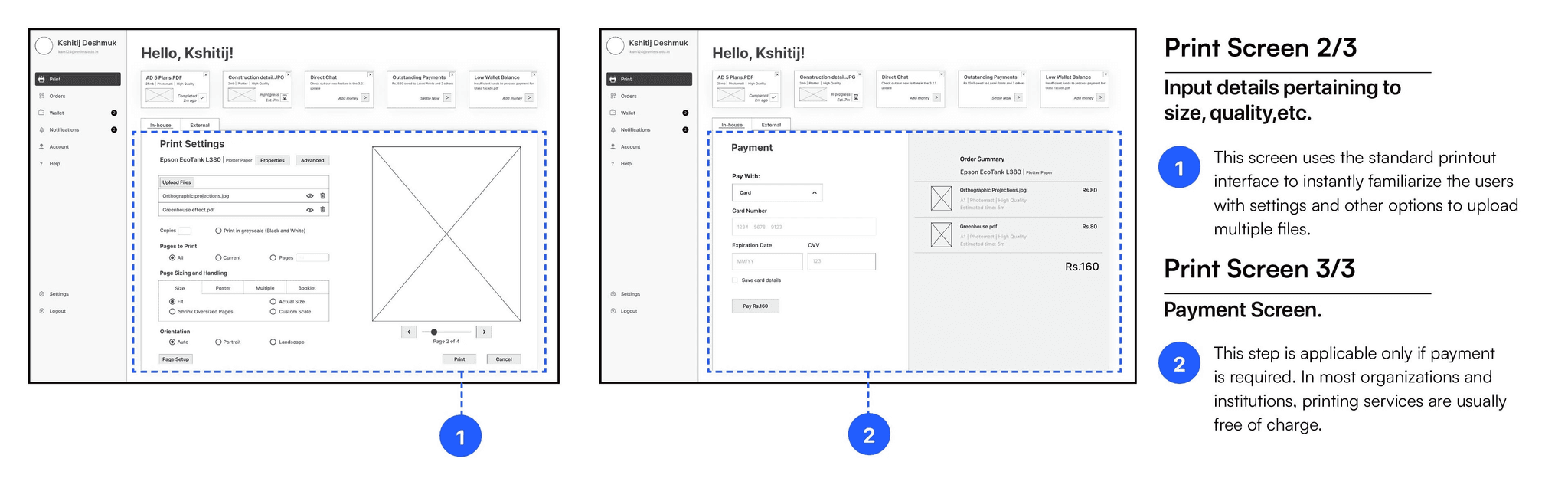
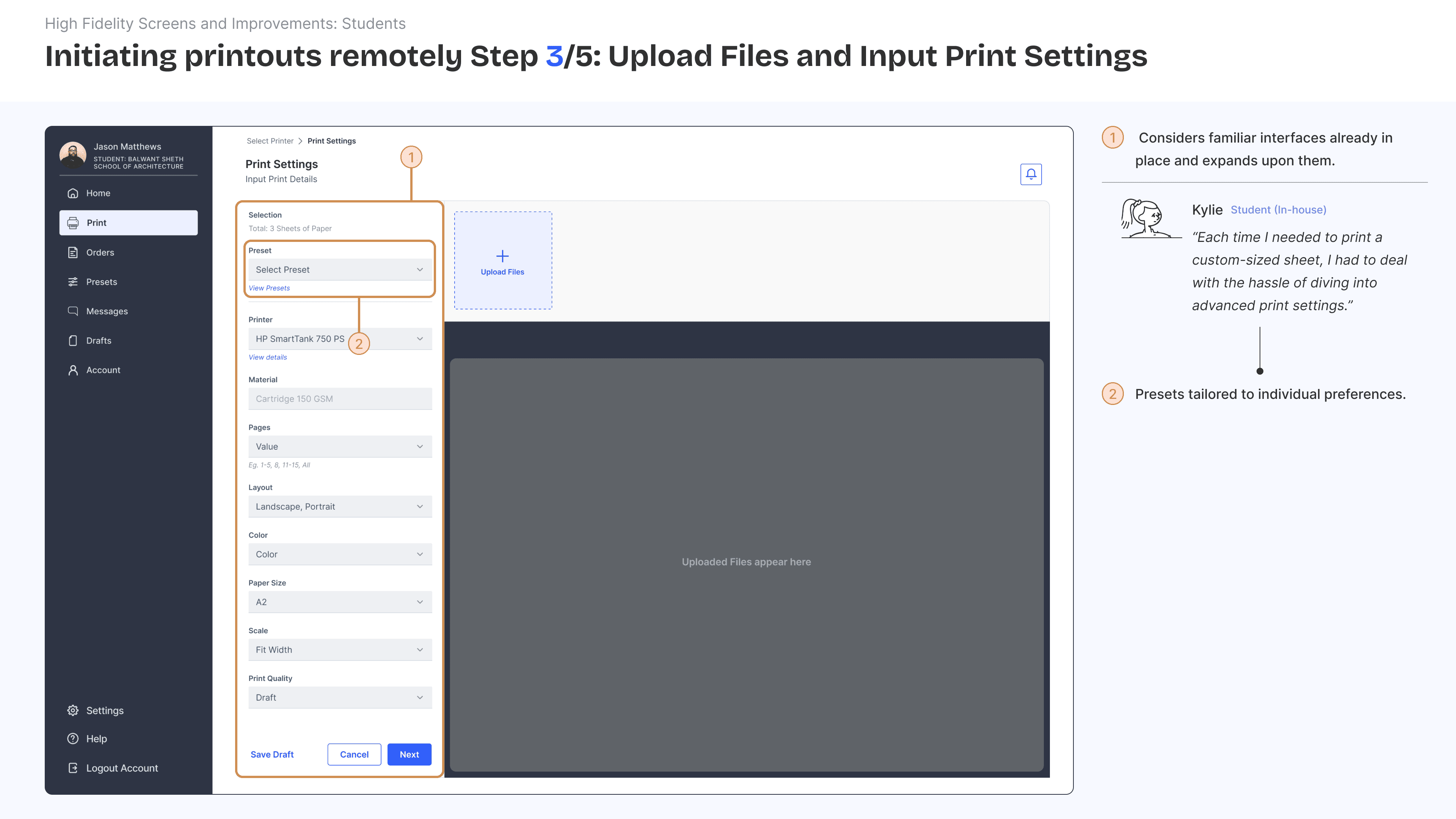
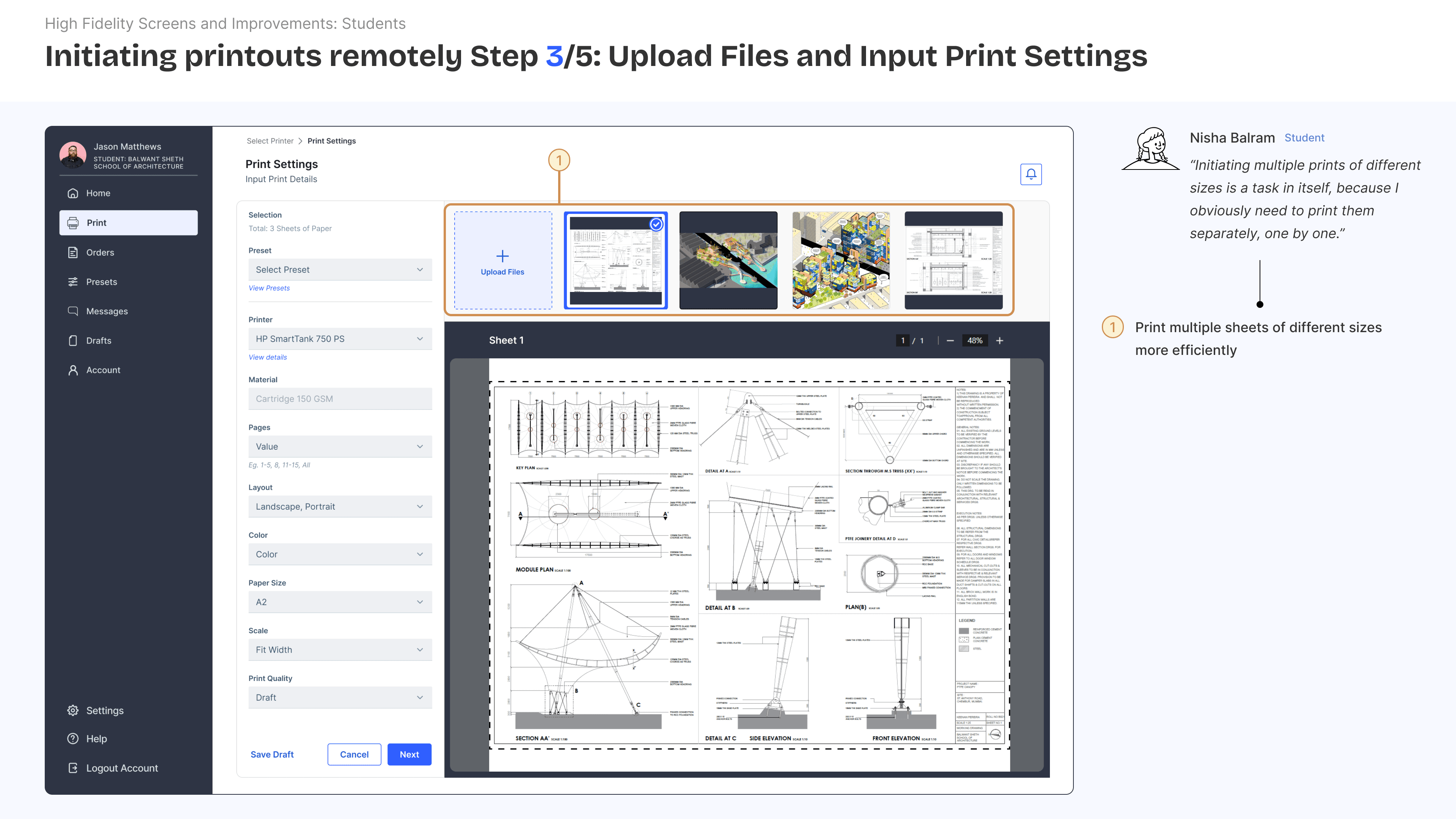
The ability to print several sheets at once, each with individualized print settings and advanced, user created presets, fulfills the requirements of power users.
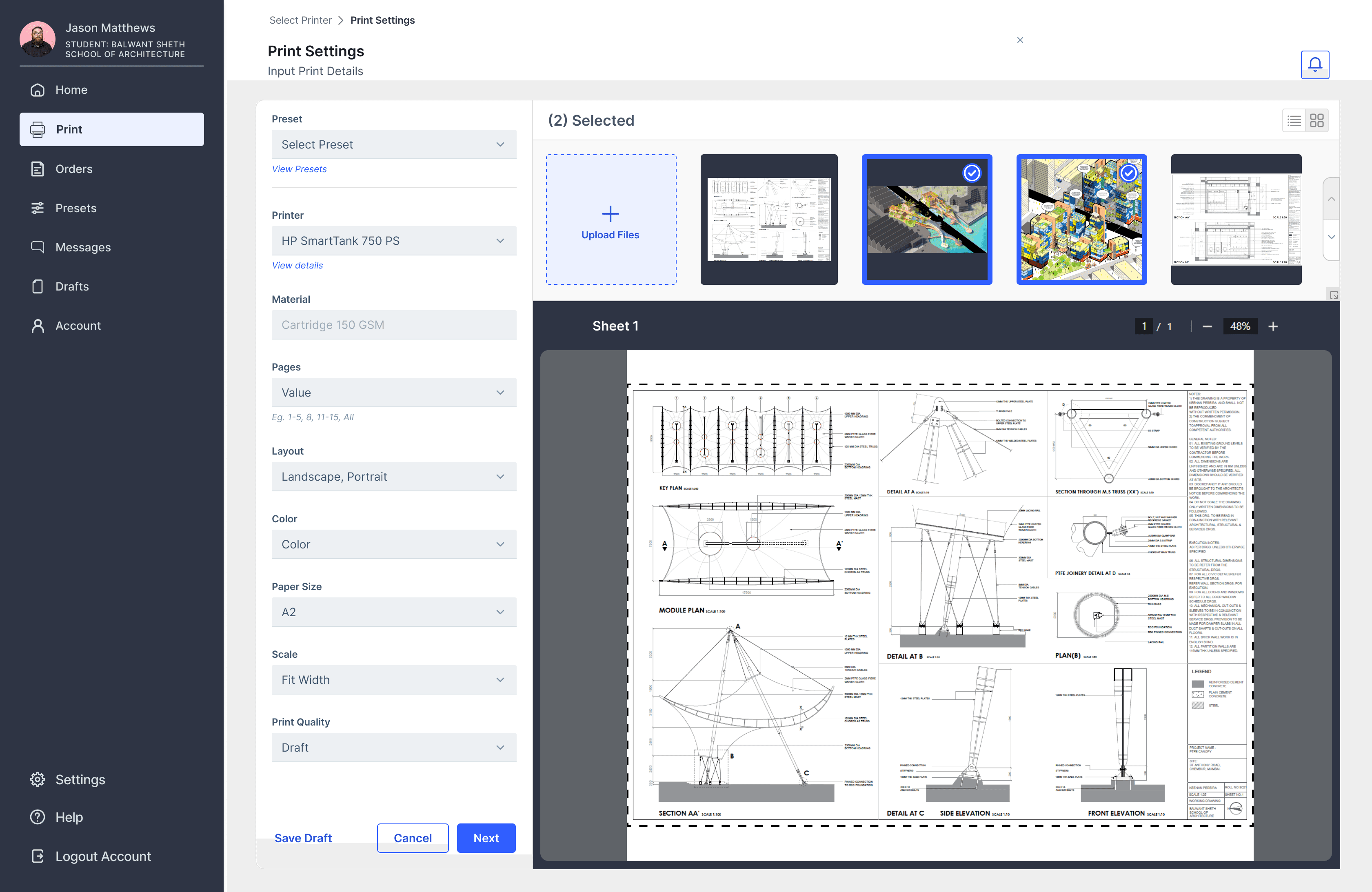
3
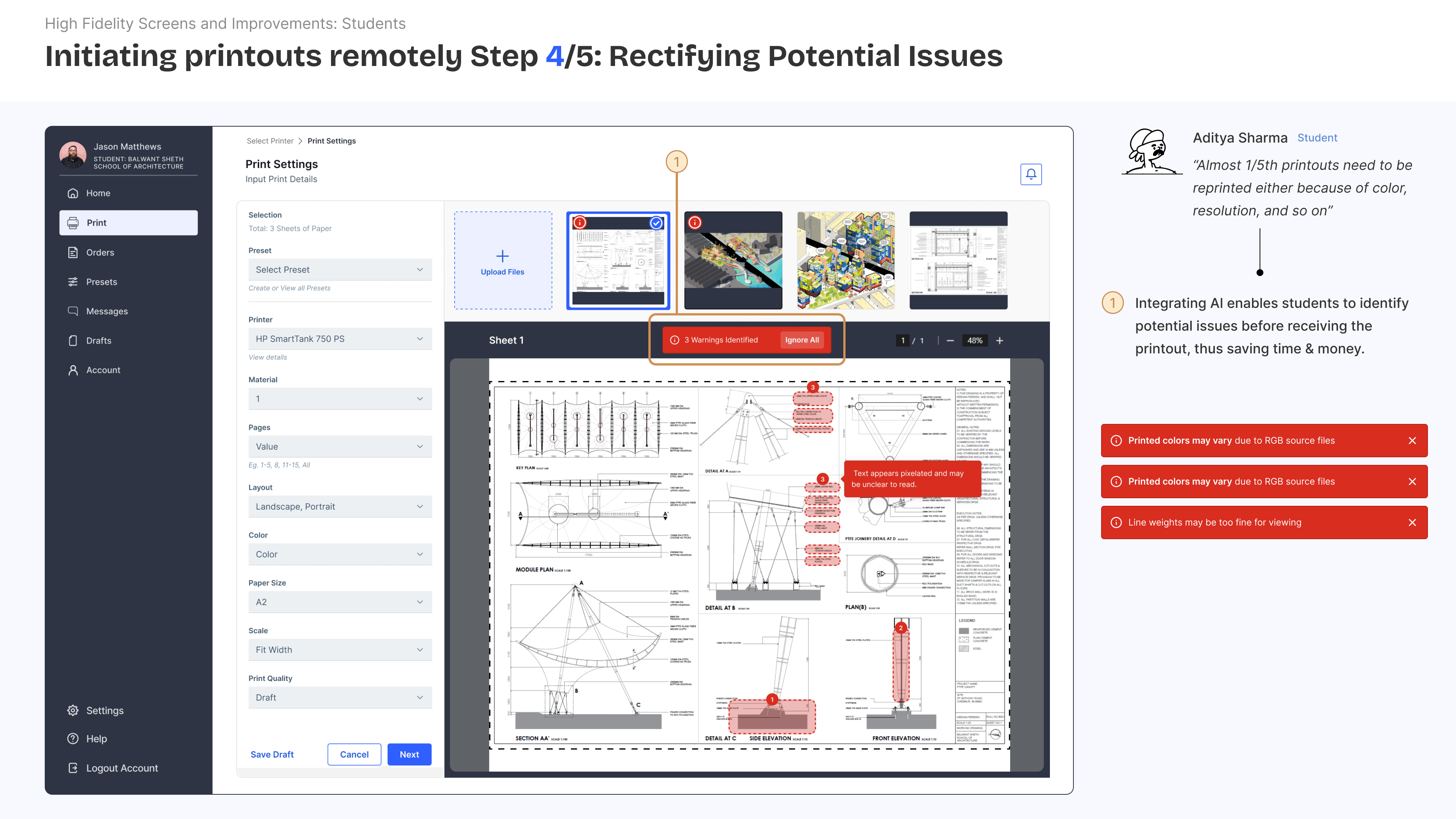
The integration of AI helps identify errors and irregularities, preventing expensive print mistakes or reprints, which in turn saves paper, time, money, and effort.
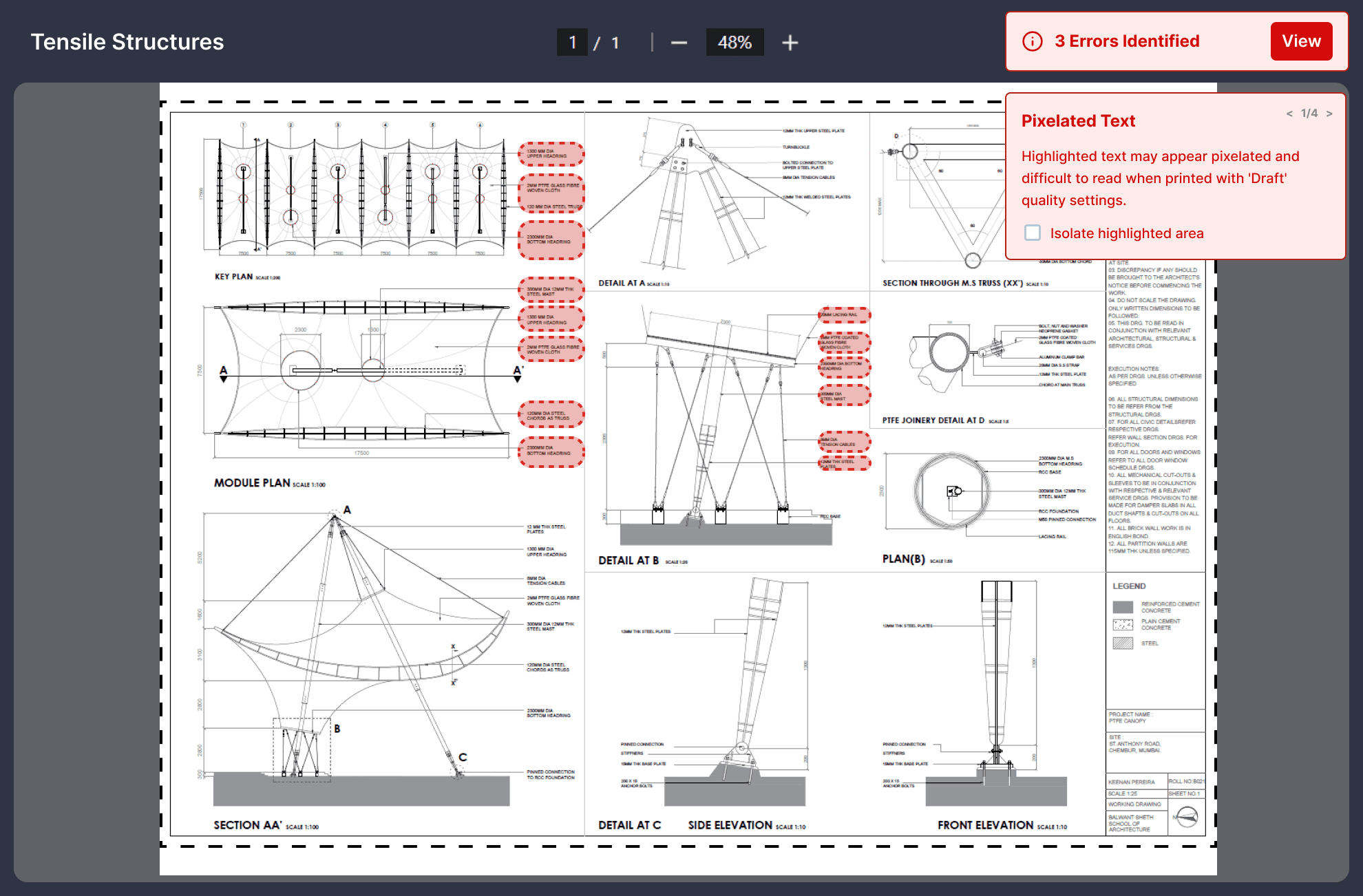
4
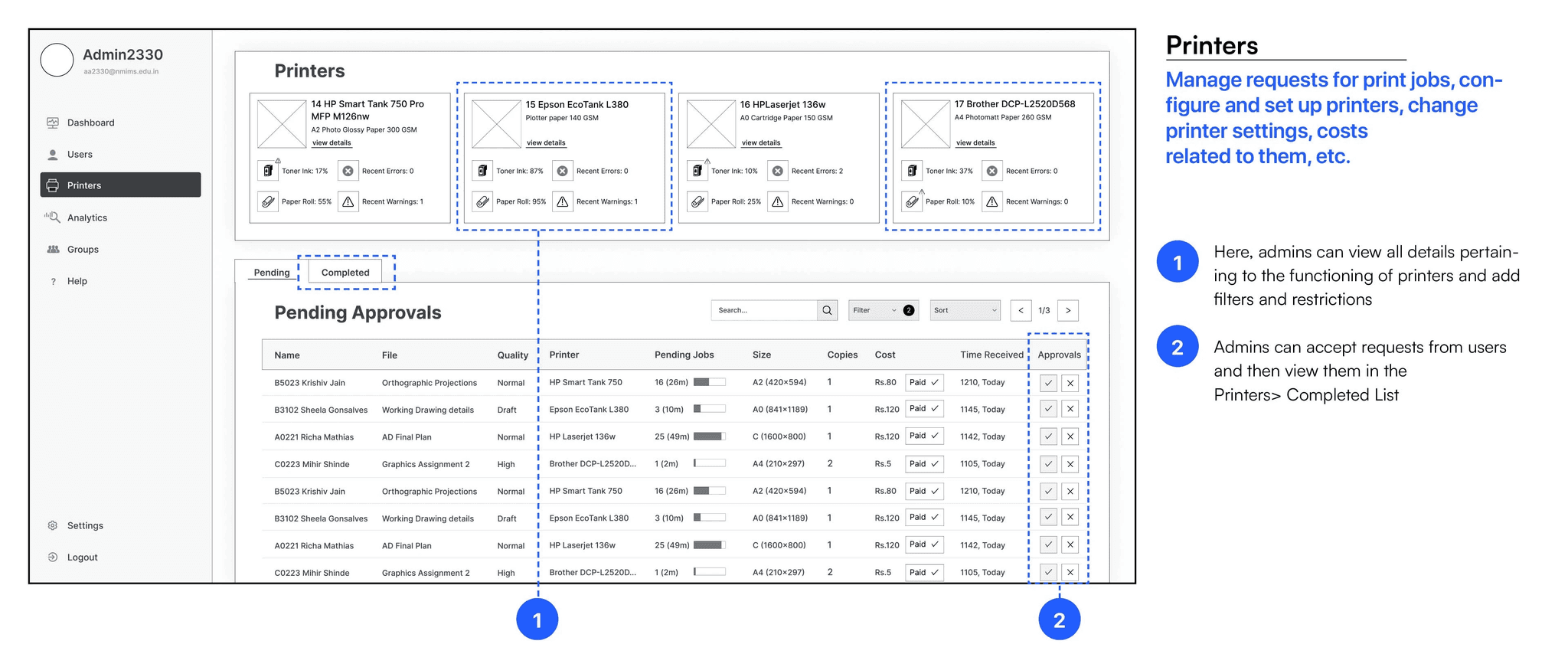
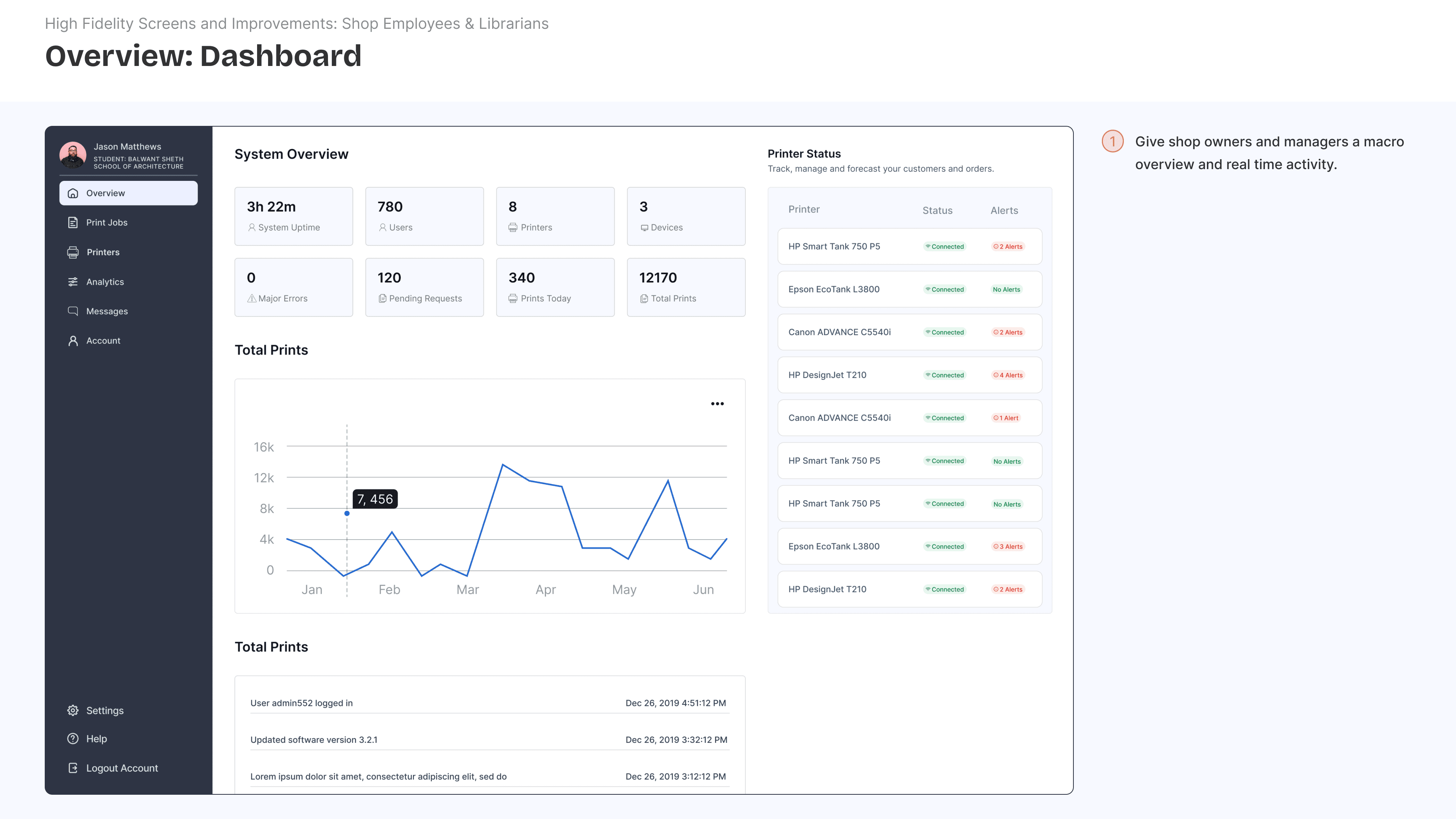
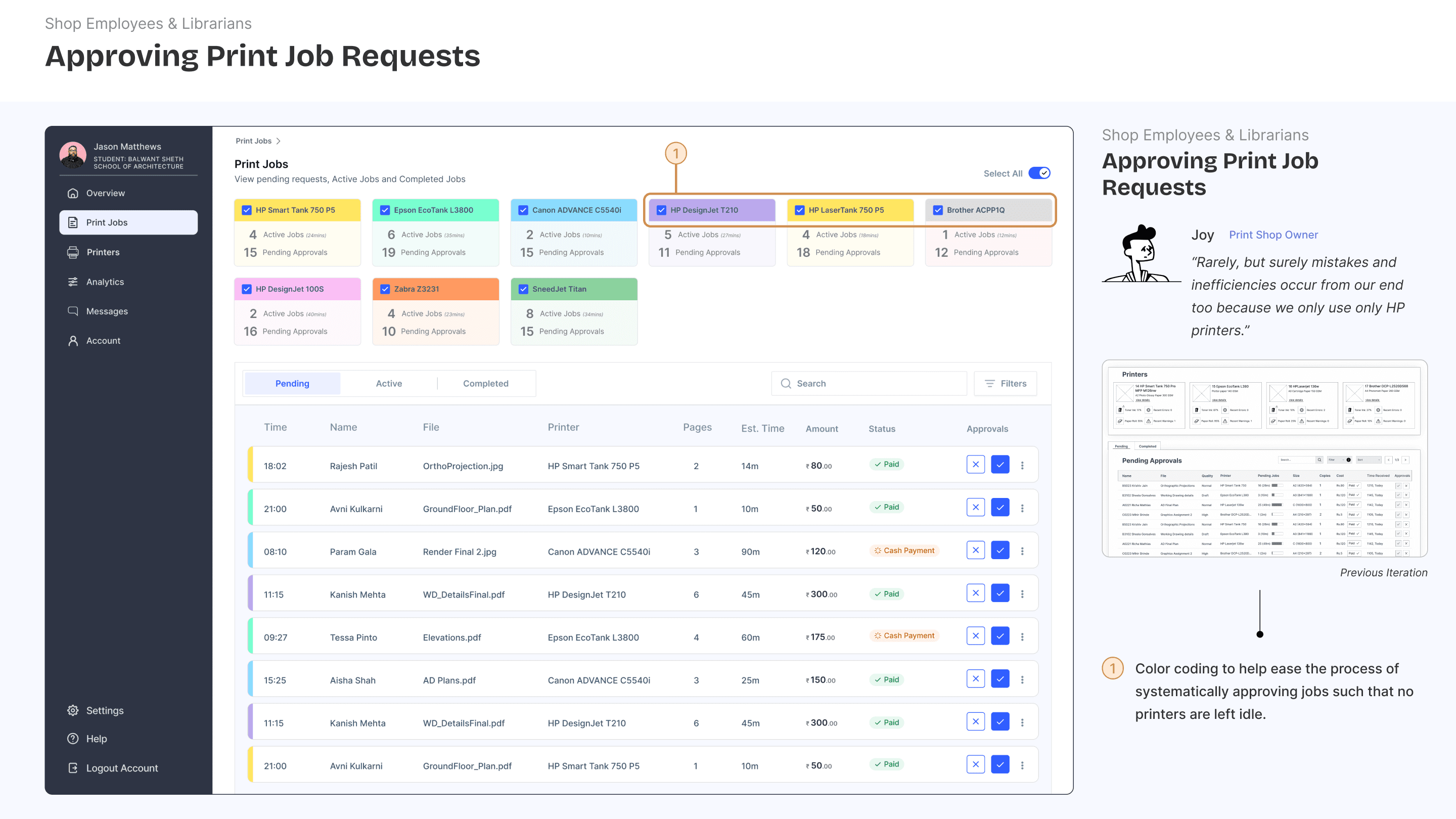
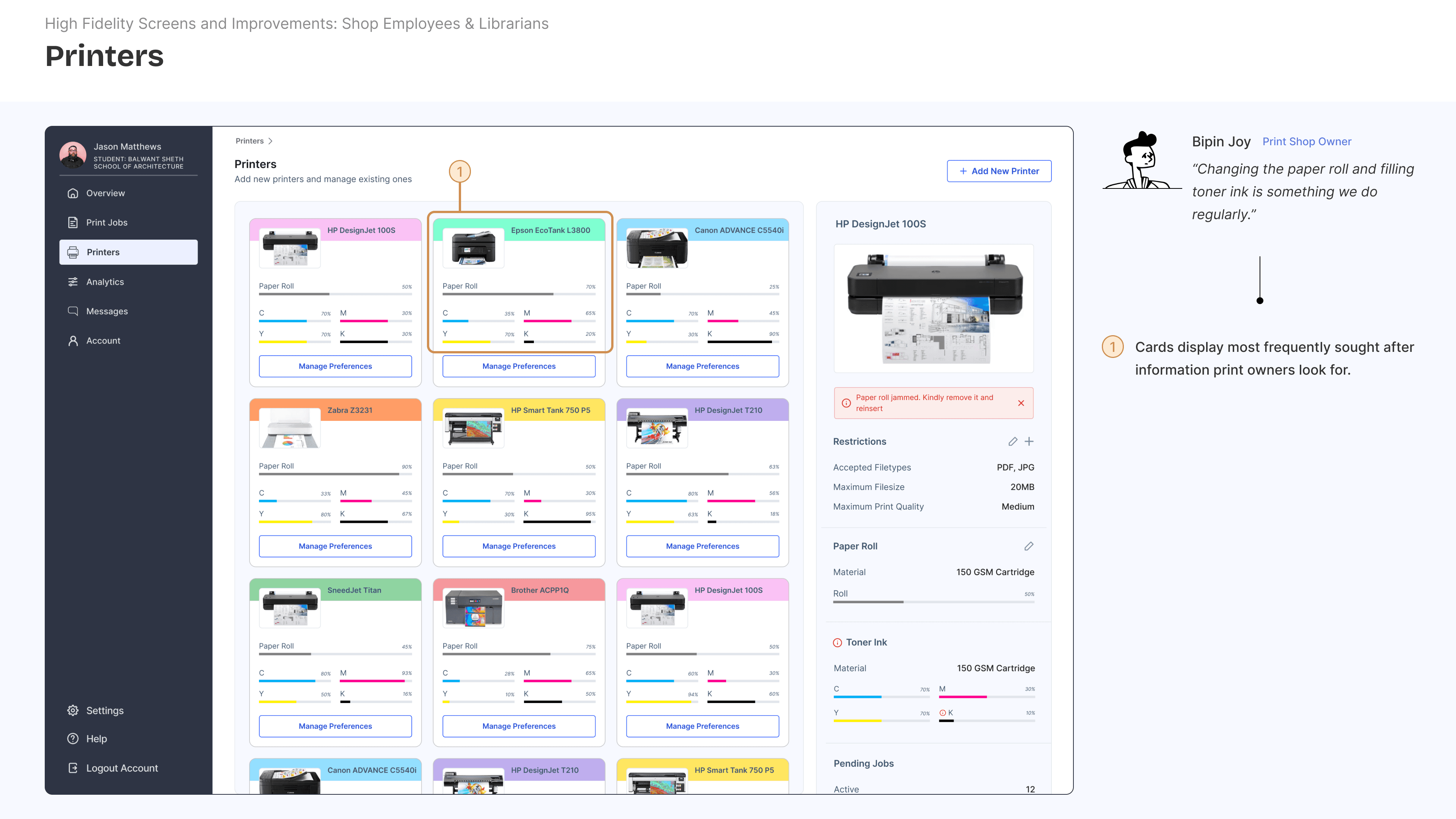
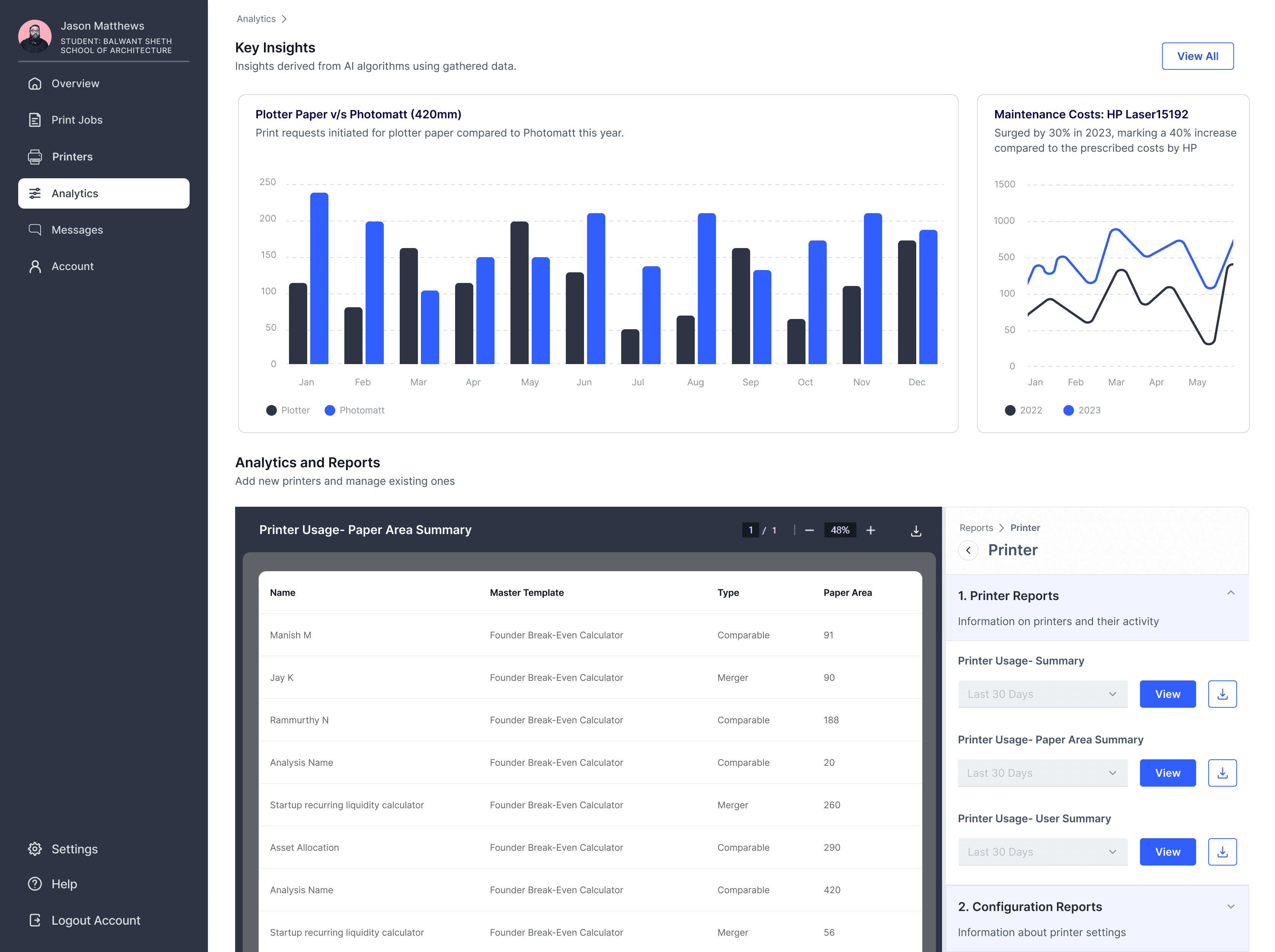
Print shop owners can now streamline approval processes for incoming print requests and effectively manage their business during periods of high demand.
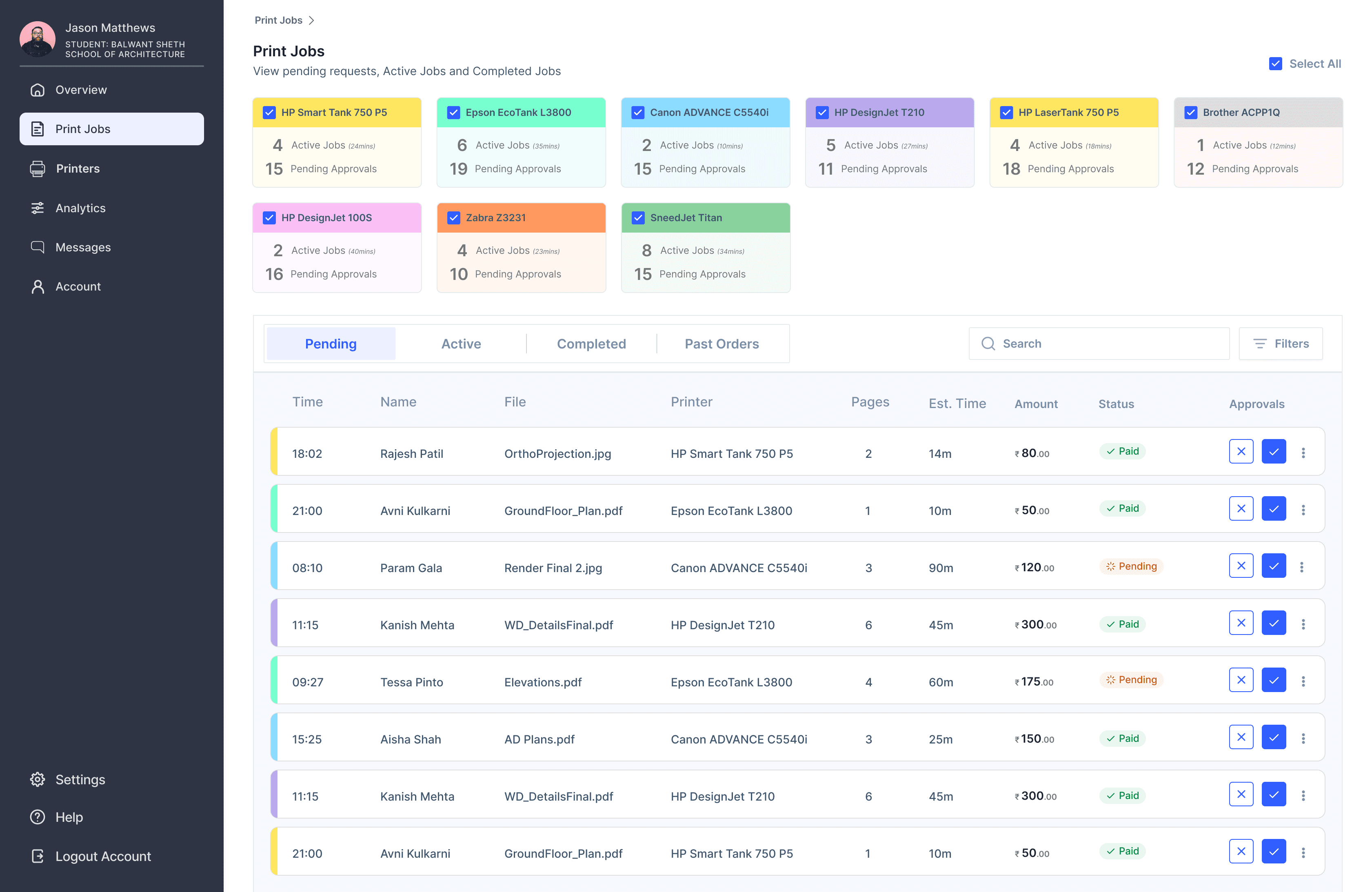
5
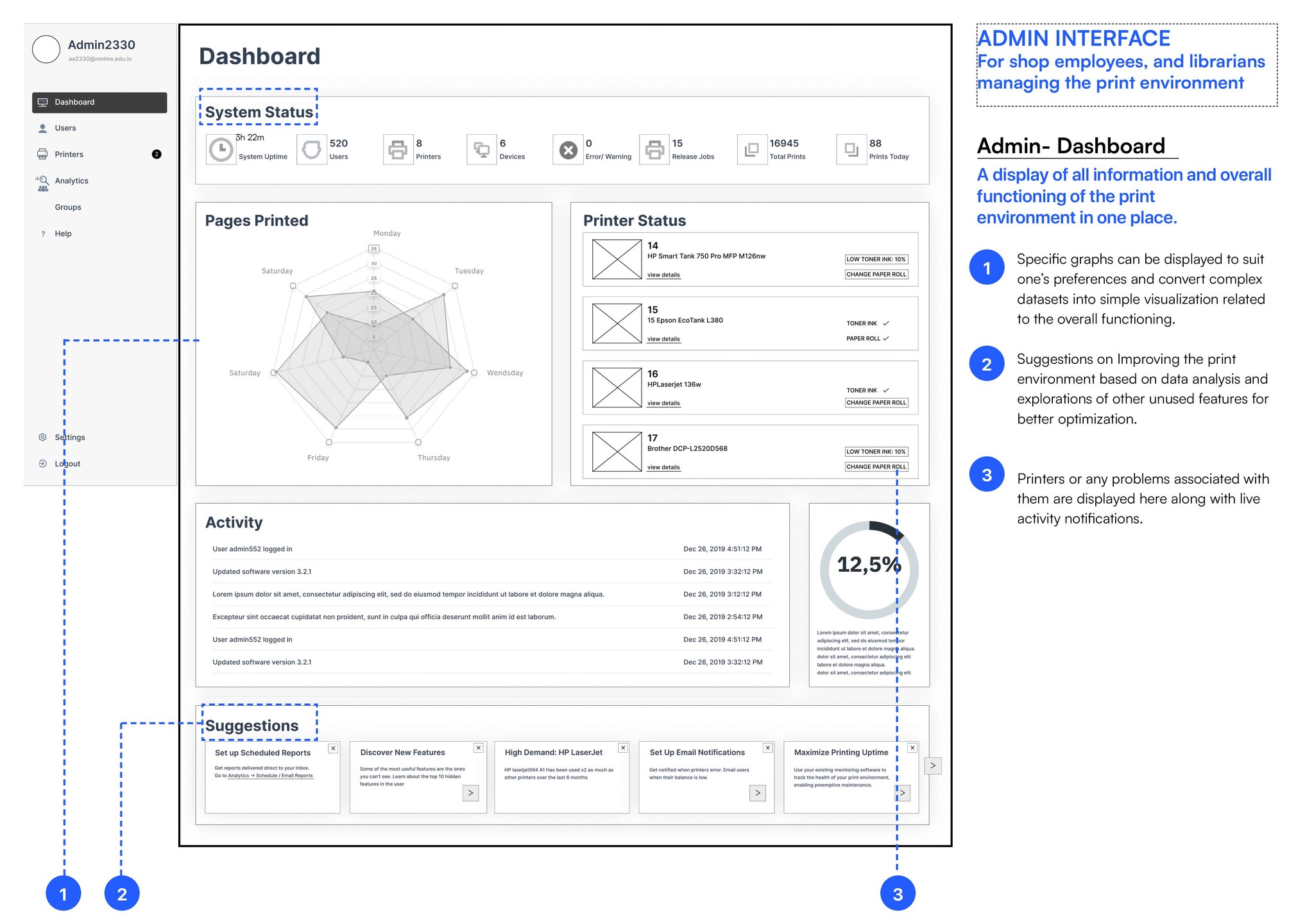
Print shop analytics help drive growth, uncover underlying issues, guide future investment decisions and elevate the business to the next level.
DETAILED SOLUTION
But how did I get there?
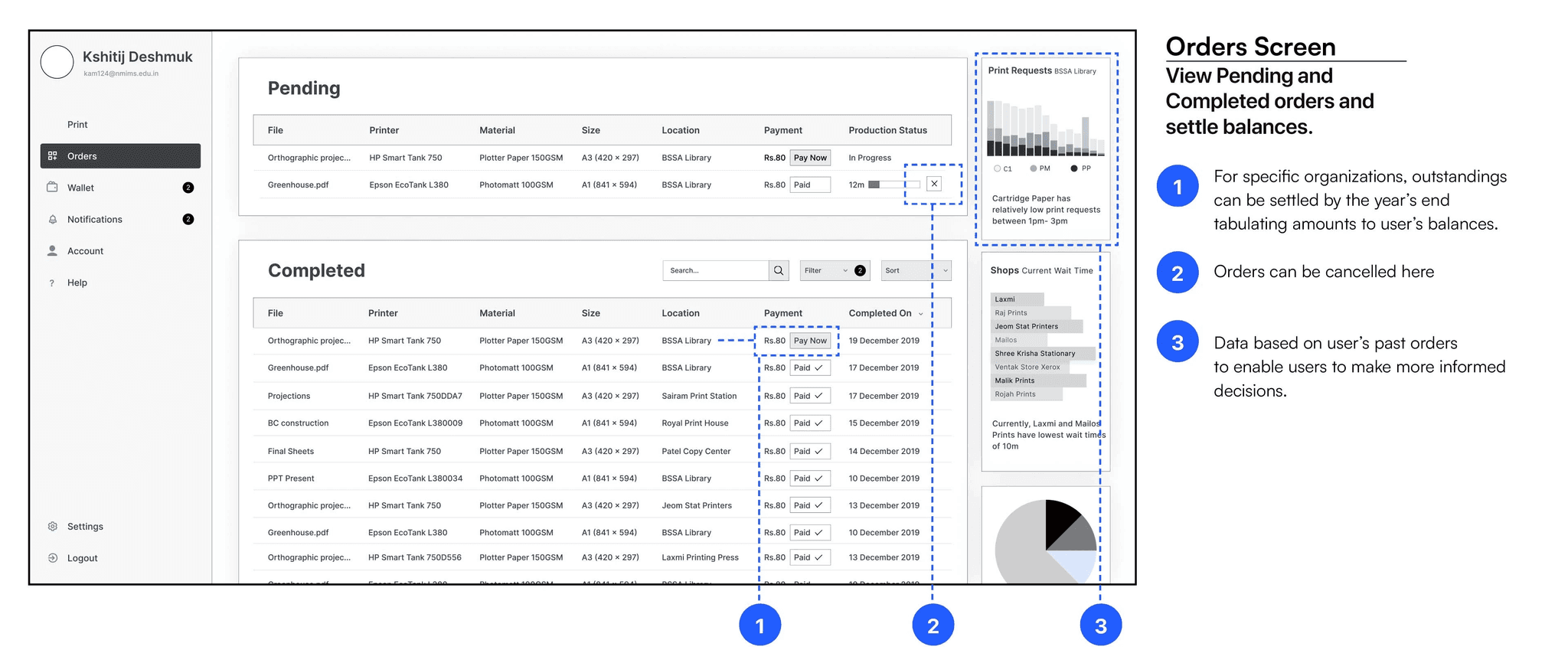
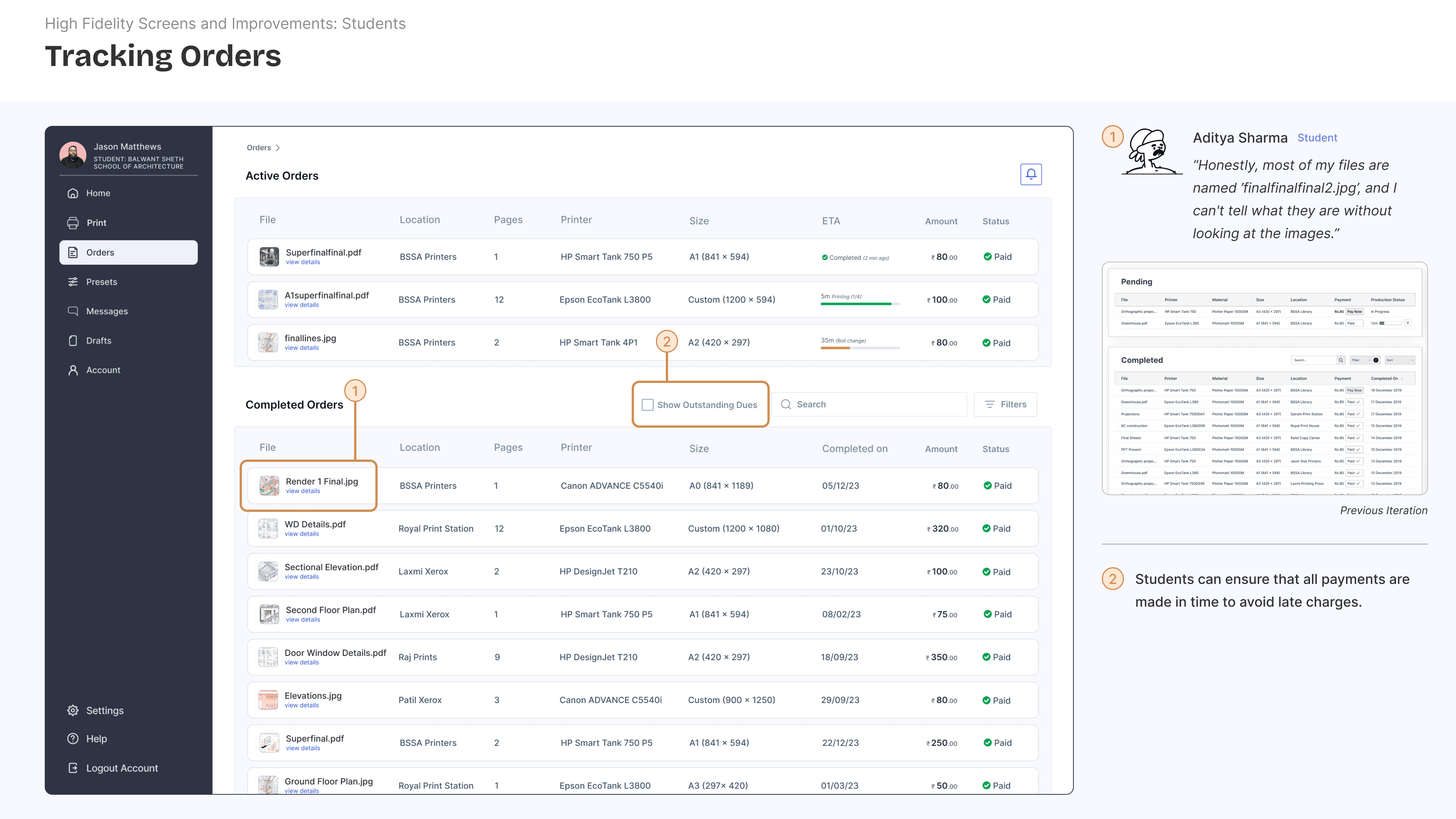
After validating the concept through storyboarding, I moved to wireframing to define the design further. Through multiple rounds of testing and iteration, I refined both the student experience and print shop dashboard to balance ease of use with the depth of functionality each user type required.
WIREFRAMES AND ITERATIONS: PART 1
Designing for Time-Pressed Students
WIREFRAMES AND ITERATIONS :PART 2
Streamlining Approvals Without Sacrificing Quality Control